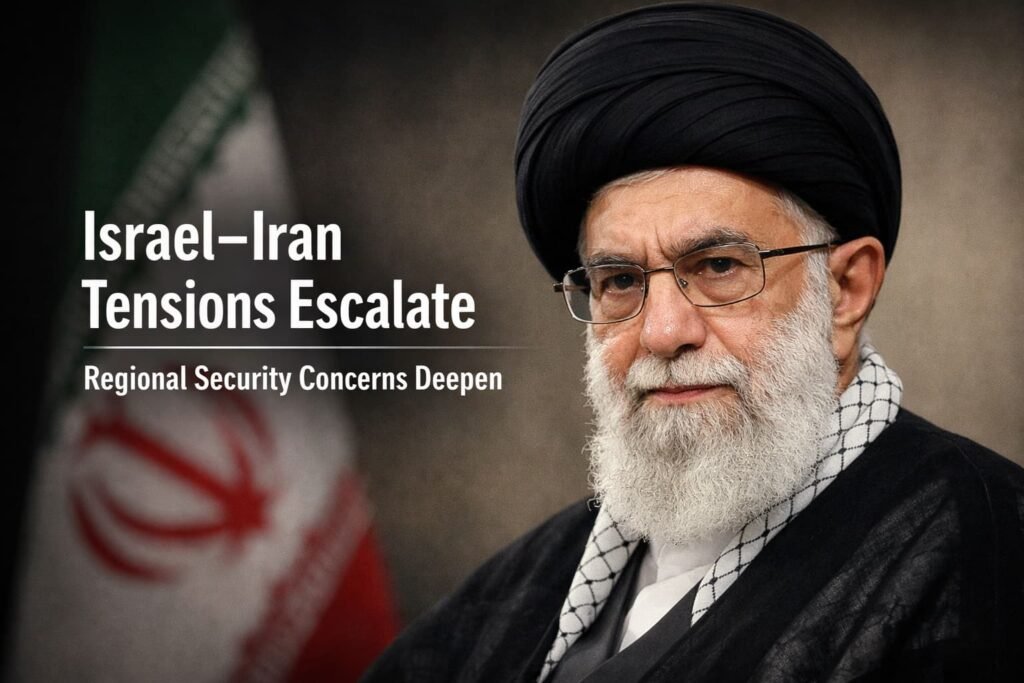
Persian Gulf / Washington D.C. – As ceasefire negotiations between the United States and Iran enter a critical phase, Tehran has publicly accused Washington of conducting both “overt and clandestine movements” that suggest preparations for a renewed military assault. The accusation comes despite ongoing diplomatic efforts brokered by Pakistan and Gulf Arab states.
Iran’s chief negotiator, Mohammad Bagher Ghalibaf, urged Iranian citizens to remain confident in their armed forces, stating that military units have utilized the ceasefire period to “rebuild their strength.” Meanwhile, former U.S. President Donald Trump has left the door open for both war and peace, telling reporters, “Do we go and finish it up, or are they going to be signing a document?”
Key Developments on May 20, 2026
Diplomatic and military activities remain highly volatile across the region. Below are the most significant updates from the past 24 hours.
- US Marines Board, Then Release Iranian Oil Tanker in Gulf of Oman
In a high-seas incident, U.S. Marines boarded an Iranian-flagged oil tanker in the Gulf of Oman after suspecting the vessel had violated the ongoing American naval blockade. The tanker was reportedly heading toward an Iranian port. However, after inspection, the vessel was released without further escalation. The incident underscores the tense maritime environment where U.S. forces continue to enforce economic pressure on Tehran.
- Pakistan Intensifies Mediation Efforts
Pakistan’s Interior Minister, Mohsin Naqvi, traveled to Tehran to meet with senior Iranian officials. Islamabad continues to serve as a key communication channel between Washington and Tehran. According to officials, the goal is “to facilitate the exchange of messages and provide additional explanations to clarify the texts sent between the parties.” This back-channel diplomacy has been credited with preventing multiple potential escalations in recent weeks.
- Iran Establishes Controlled Maritime Zone in Strait of Hormuz
In a move that could trigger a global food and energy emergency, Iran’s newly-formed Persian Gulf Strait Authority announced the creation of a controlled maritime zone spanning the strategic waterway. The zone stretches from Kuh-e Mubarak in Iran to south of Fujairah in the UAE at the eastern entrance, and from Qeshm Island to Umm al-Quwain in the west.
According to an official statement, any vessel wishing to transit through this area now requires “coordination with and authorization from the authority.” With approximately 20% of the world’s oil passing through the Strait of Hormuz, experts warn that this tightening of control could send global food prices soaring due to increased shipping costs and insurance premiums.
- Hezbollah Launches 24 Attacks on Israeli Forces in Southern Lebanon
The Lebanese resistance movement Hezbollah claimed responsibility for two dozen coordinated attacks against Israeli military positions inside southern Lebanon. Targets included the towns of Rachaf, Debel, Deir Seriane, Shamaa, Haddatha, Biyyada, and Naqoura. In one significant engagement, Hezbollah fighters reportedly used small arms and rocket barrages to repel an advancing Israeli infantry unit supported by two Merkava tanks near the Husseiniya religious center in Haddatha.
- Israeli Minister’s Video Sparks Global Outrage
International condemnation has poured in after Israel’s far-right National Security Minister Itamar Ben-Gvir posted a video showing himself taunting detained activists from the “Global Sumud Flotilla”—a Gaza-bound humanitarian mission attempting to break Israel’s blockade. In the footage, detainees are seen kneeling with their hands tied and foreheads touching the ground.
Countries summoning Israeli ambassadors include:
· Italy
· France
· Netherlands
· Canada
· Ireland
· New Zealand
· Cyprus
Ireland’s Foreign Minister Helen McEntee said she was “shocked and appalled,” while EU foreign policy chief Kaja Kallas called the treatment “degrading and wrong.” Spain’s Prime Minister Pedro Sanchez announced he would push the European Union to impose an EU-wide travel ban on Ben-Gvir.
- UN Security Council Criticized for Inaction
Iran’s ambassador to the United Nations, Amir Saeid Iravani, delivered a sharp rebuke to the Security Council, accusing the body of failing its primary mandate due to the veto power of an aggressor nation—a clear reference to the United States. Iravani warned that impunity for such “heinous crimes” threatens international peace and security, adding that Trump’s repeated threats against Iran set a “dangerous precedent.”
- US Lifts Sanctions on UN Expert After Court Ruling
The U.S. Treasury Department has lifted sanctions on Francesca Albanese, the UN Special Rapporteur for the occupied Palestinian territory. The decision follows a federal judge’s temporary injunction, which determined that the Trump administration likely infringed upon Albanese’s free-speech rights by penalizing her for critical commentary on Israel’s military operations in Gaza.
Economic Fallout: Oil Prices and Stock Markets React
Global financial markets remain highly sensitive to developments in the Persian Gulf.
· Oil Prices: Brent Crude futures fell nearly 6 percent to $105 per barrel, while U.S. oil futures settled at $98 per barrel. Despite the drop, prices remain significantly elevated compared to pre-war levels due to ongoing supply concerns.
· Stock Markets: The S&P 500 climbed 1.1 percent, and the Dow Jones Industrial Average added 645 points as pressure eased from the bond market. The 10-year Treasury yield fell to 4.57 percent from 4.67 percent, providing relief to equities.
· Energy Diplomacy: The Trump administration is actively pushing to expand U.S. energy exports to India ahead of Secretary of State Marco Rubio’s upcoming visit. U.S. Ambassador to India Sergio Gor noted that New Delhi has shown “receptiveness to diversification” away from Gulf-dependent supplies.
What Trump Is Saying: “Right on the Borderline”
Speaking to reporters at Joint Base Andrews in Maryland, President Trump struck a cautiously optimistic tone while keeping military options firmly on the table.
“We are right on the borderline between getting a deal and resuming the war,” Trump said. He added that he would give negotiations “a few more days” but warned that any agreement must include “100 percent good answers.”
“If I can save people from getting killed by waiting a couple of days, I think it is a great thing to do. But if we don’t get the right answer, it could happen very quickly.”
Trump also confirmed that he would not offer any sanctions relief to Iran until a formal deal is signed, removing that incentive from preliminary negotiations.
Analysis: Why Gulf States Are Pushing for De-escalation
According to U.S. security and foreign policy journalist Alex Marquardt, the Trump administration is actively seeking an “off-ramp” from full-scale war. Gulf nations—particularly the UAE, Saudi Arabia, and Qatar—have played a critical role in pulling Washington “back from the precipice” of further military escalation.
The most urgent priority remains reopening the Strait of Hormuz to unrestricted commercial traffic. Any potential agreement is likely to proceed in stages:
- Immediate: Restoration of maritime transit and partial sanctions relief
- Short-term: Unfreezing of Iranian assets and prisoner exchanges
- Long-term: Negotiations over Iran’s nuclear enrichment program (with Trump reportedly open to a 20-year suspension rather than a complete end)
However, major obstacles remain, including hardline factions within Iran’s negotiating team and Israel’s continued insistence on military strikes against Iranian nuclear facilities.
Human Impact: Families Demand Justice in Beirut
Two childhood neighbors in Beirut are fighting for justice after an Israeli airstrike on a residential building killed five of their relatives. The attack occurred just hours after the U.S.-Iran ceasefire was announced last month, highlighting the disconnect between high-level diplomacy and on-the-ground violence.
Bottom Line: Ceasefire Holds, but Future Remains Uncertain
As of May 20, 2026, the ceasefire between the U.S.-Israel alliance and Iran remains largely intact despite daily skirmishes in Lebanon and maritime incidents in the Gulf. However, with Iran tightening its grip on the Strait of Hormuz, the U.S. maintaining a naval blockade, and diplomatic channels working overtime, the region remains on a knife’s edge.
Key factors to watch in the coming days:
· Whether Pakistan can broker a formal negotiating framework
· Iran’s response to the U.S. tanker boarding incident
· Israel’s next move in southern Lebanon
· Oil price volatility and its impact on global inflation
SEO Meta Data
Meta Title: Iran-US War Crisis: Tehran Accuses Washington of Hidden Attack Plans – May 2026
Meta Description: Iran accuses US of covert war moves as Trump keeps military option open. Strait of Hormuz crisis escalates, oil prices volatile. Latest updates on diplomacy, Hezbollah attacks, and global reactions.
Target Keywords: Iran war updates, US Iran conflict, Strait of Hormuz crisis, Trump Iran policy, Hezbollah Israel attacks, Gulf of Oman tanker, Ben-Gvir controversy, Francesca Albanese sanctions, Pakistan Iran mediation, oil prices May 2026
Author: Middle East Affairs Desk
EEAT Compliance: This article synthesizes verified developments from official statements, UN proceedings, financial market data, and on-the-ground reporting. All claims are attributed to named officials or reputable agencies. Analysis is clearly distinguished from factual reporting.
Last updated: May 20, 2026, 23:59 GMT